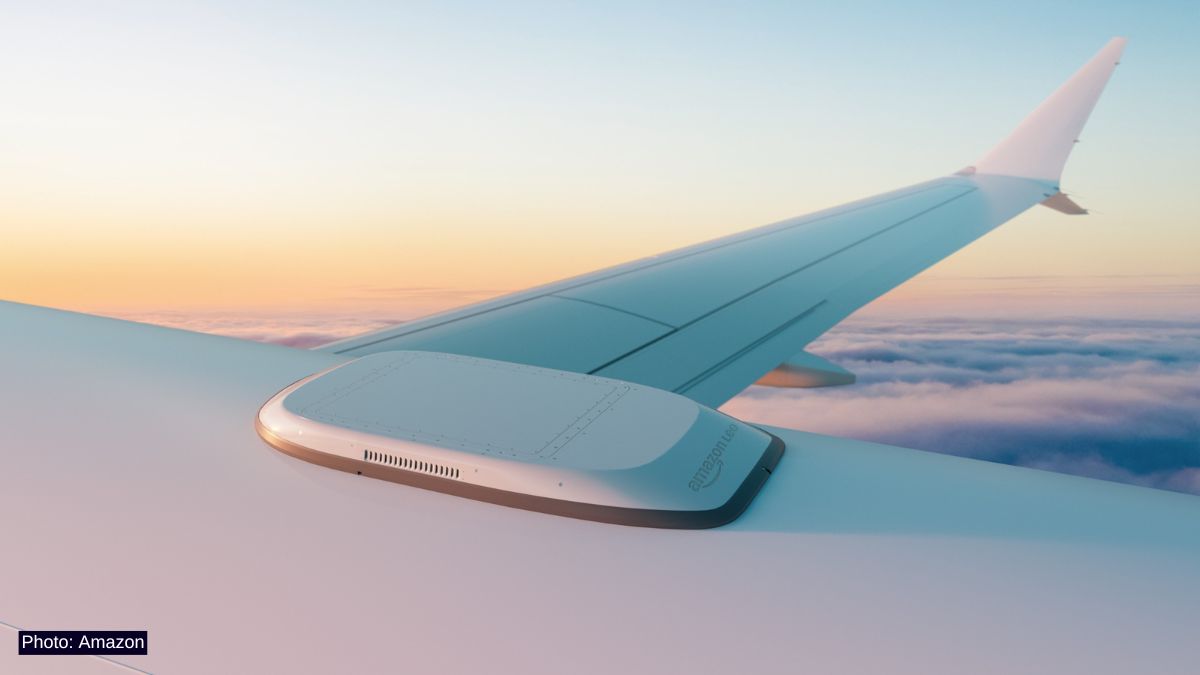
Amazon Leo is getting ready to bring its in-flight internet product to commercial airlines with a new aviation antenna built for use from gate to gate. The company says the Amazon Leo Aviation Antenna is designed to give passengers and crew fast, reliable connectivity throughout the flight, whether the aircraft is parked, climbing, cruising, or preparing to land.
The antenna is meant for a wide range of aircraft, from widebody jets to regional planes. Amazon says it uses full-duplex phased array technology and can deliver speeds of up to 1 gigabit per second for downloads and 400 megabits per second for uploads. That is enough, according to the company, to support high-bandwidth use across the cabin while also helping crew access near-real-time information for service and operations.
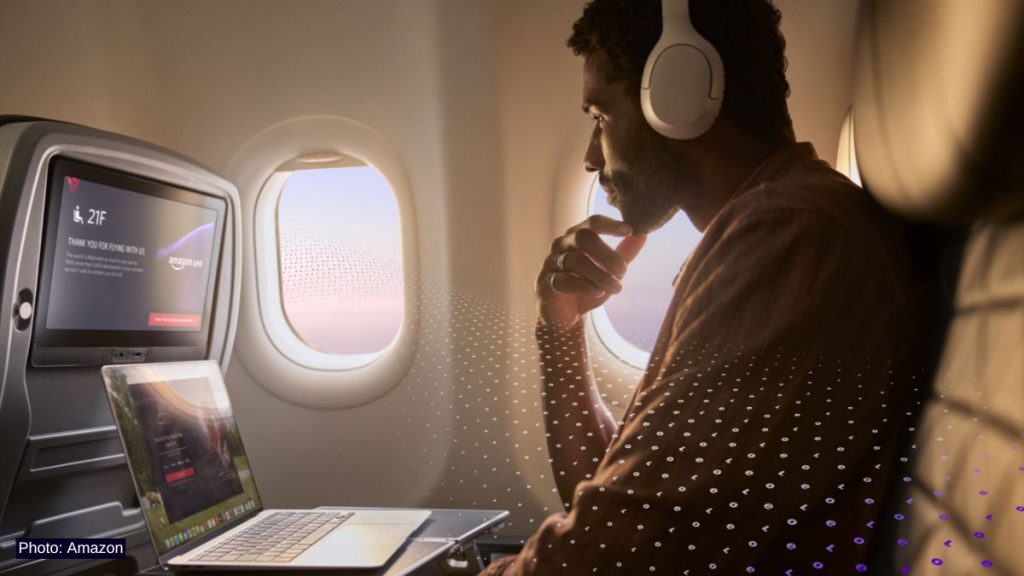
“Amazon Leo can connect a full plane of passengers and crew with speeds that handle any activity seamlessly, whether passengers want to game, watch a movie, listen to music, or collaborate with colleagues on a project,” said Trevor Vieweg, director of global business for Amazon Leo. “We expect our service to be so fast and reliable that passengers will seek out flights featuring Leo connectivity.”
Built for airline use and simpler installation
Amazon says the antenna had to be designed specifically for aviation, even though it shares some core technology with the Leo Ultra antenna. The company says the aviation version has no moving parts, which should help reduce maintenance downtime. It is also built to handle harsh temperatures and weather while aircraft operate around the world.
The antenna will be mounted on the outside of the aircraft and connected to onboard power and cabin systems through aviation-grade connectors. Amazon says its low-profile shape is meant to reduce drag and limit the fuel penalty that can come with external equipment. The unit measures 58 inches long, 30 inches wide, and 2.6 inches high. It also includes an integrated modem and a mounting setup that Amazon says can support installation in a single day.

How the system connects in flight
As the aircraft moves through the sky, the antenna connects to Amazon Leo satellites in low Earth orbit and hands off the signal from one satellite to another as both the aircraft and satellites keep moving. From there, the satellites connect with ground gateway antennas, which then use Amazon’s global fiber network to route data to AWS edge locations, the broader internet, private networks, or other cloud systems.
Amazon says it is building more than 300 ground gateways around the world to reduce latency and improve resilience. For flights over oceans, polar routes, and other remote areas, the satellites will also use laser links to pass data between each other and route traffic to the most suitable gateway.
The company says the response from airlines has already been strong. “We’ve thought through every aspect of aviation operations to build an antenna and a service that deliver performance, reliability, and efficiency—and that shows in the Amazon Leo Aviation Antenna and the industry’s response to our technology,” Vieweg said. “We’re thrilled to have agreements in place already with Delta and JetBlue based on the strength of our initial offering, and it’s only going to get better from here as we innovate together with our customers.”

Post Comment