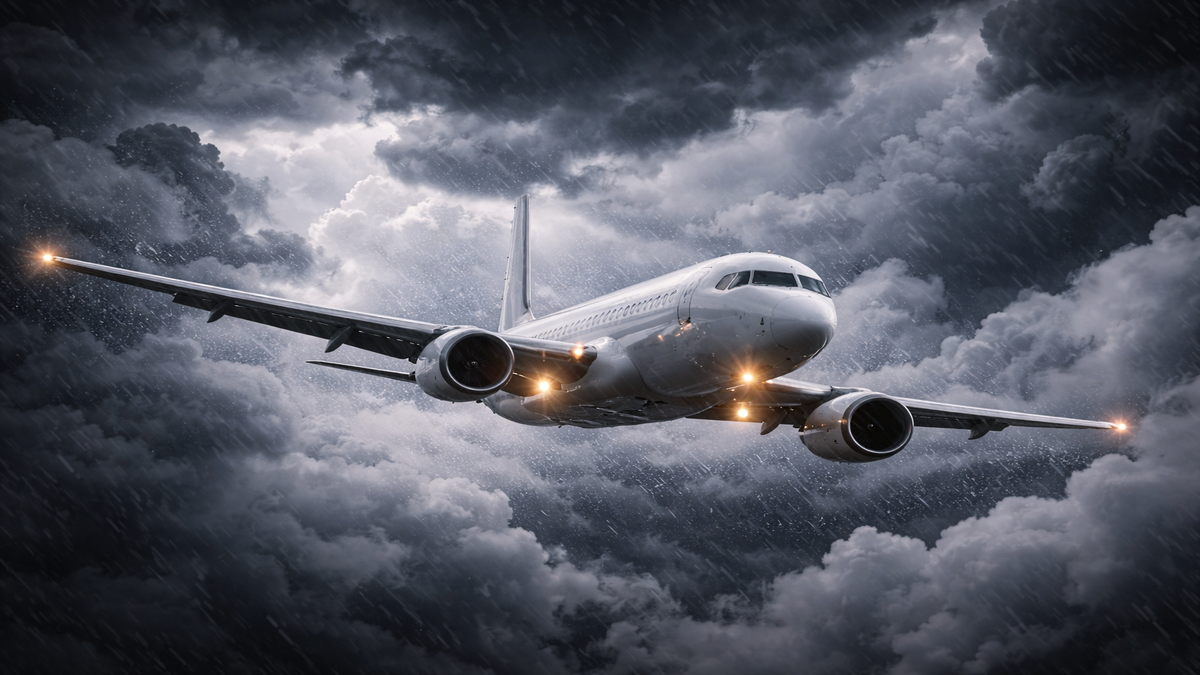
Turbulence can feel scary when you do not know what is happening. Sudden jolts or quick drops can make you think the aircraft might lose control. Turbulence almost never brings down a modern airliner. Most of the risk comes from injuries inside the cabin when people or loose items move without restraint.
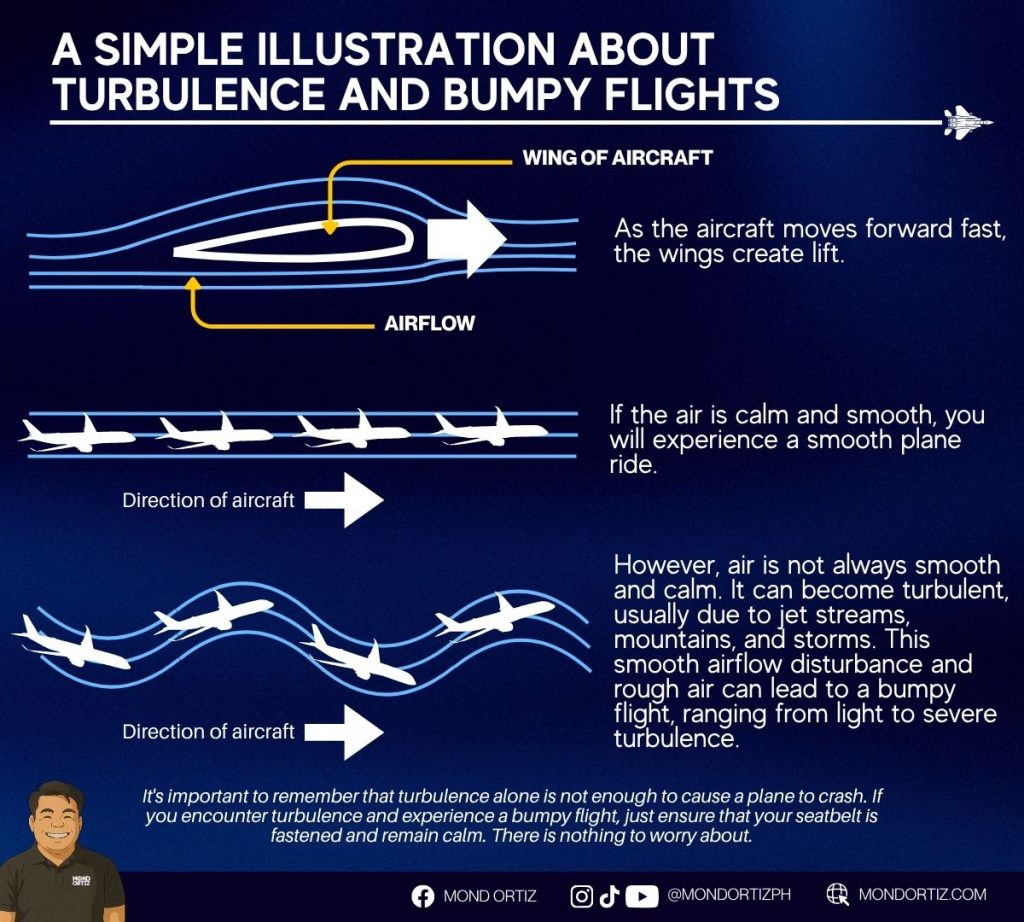
Turbulence means uneven airflow that makes the aircraft shake, bump, or move up and down. Pockets of air can push the airplane in different directions for short moments. The airplane does not “fall,” but you can feel the motion in your seat.
A simple way to picture it is a car on a rough road. The road surface makes the car jolt, and you feel those jolts in your body. The car still stays on the road when the driver stays in control. Turbulence can feel uncomfortable in the same way when the wind becomes unstable, and the aircraft keeps flying.
Why turbulence happens
Weather creates many kinds of turbulence. Thunderstorms create strong rising and sinking air. Mountain ranges bend airflow and can create a wave-like motion on the downwind side. Wind can also change speed and direction over a short distance. Pilots call that wind shear, and it can shake the aircraft even when you do not see clouds.
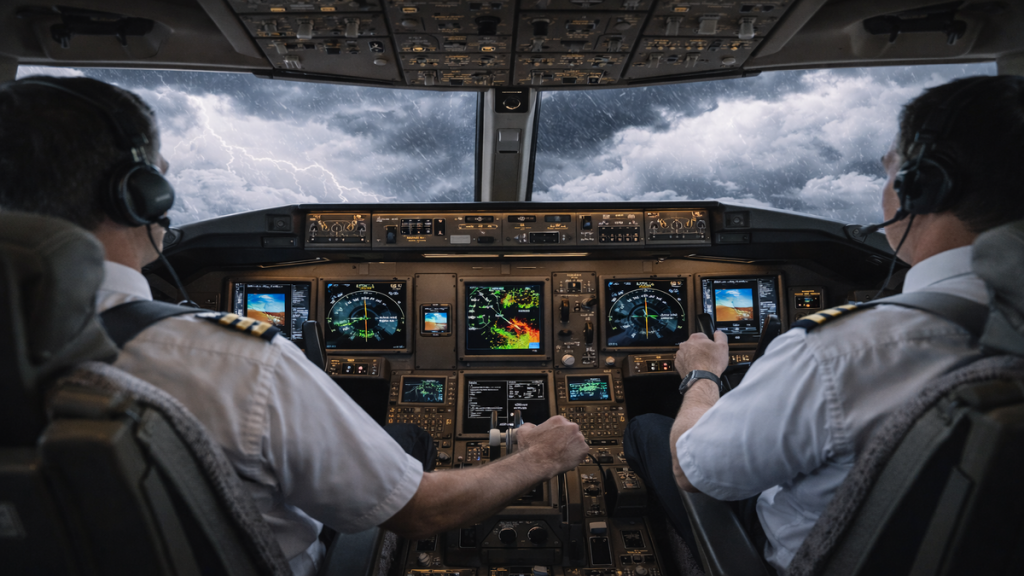
Cumulonimbus clouds, which many pilots call CB or Charlie Bravo, can bring the roughest air. Pilots plan to avoid these clouds because they can produce strong updrafts, downdrafts, and wind shear. Pilots use onboard weather radar to spot areas of heavy rain inside storm cells. Weather radar shows rain and hail, not turbulence itself, so crews also use forecasts, pilot reports, and set procedures to stay clear of the worst areas.
Clear air turbulence and why it surprises people
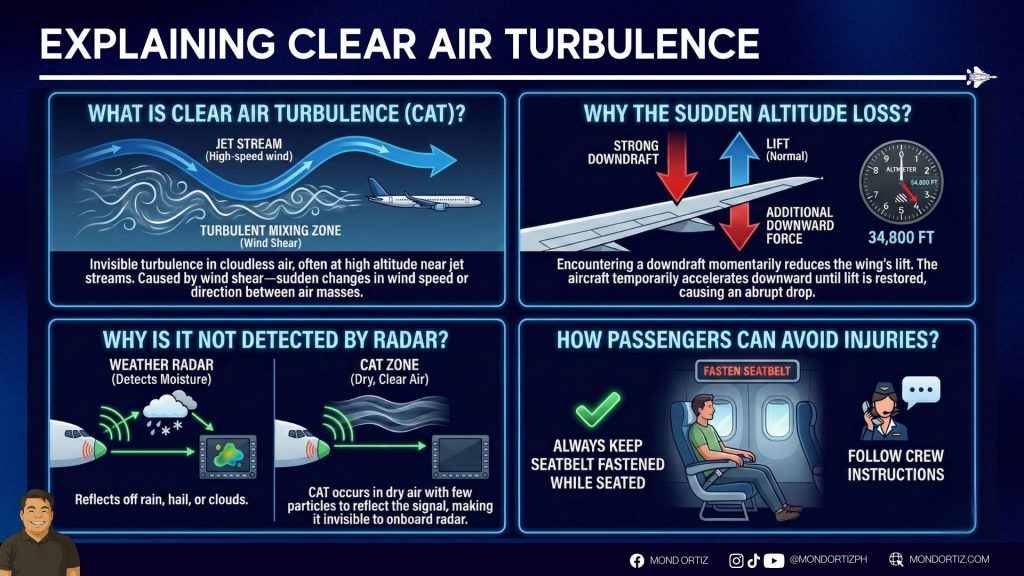
Clear Air Turbulence, or CAT, can show up with no visible warning. The FAA defines CAT as sudden severe turbulence in cloudless regions that can buffet an aircraft. CAT often links to wind shear at cruise altitude and can appear near jet streams.
Pilots cannot rely on radar to “see” CAT because weather radar detects rain and hail, not turbulence. Crews use forecasts and pilot reports to plan smoother routes, and bumps can still show up without warning. This is why seat belt habits matter even on calm, clear flights.
Turbulence can feel rough, and the airplane can still stay within its design limits. Engineers design transport airplanes with safety margins built into the structure. U.S. rules require a 1.5 factor of safety on prescribed limit loads. This means the structure must handle loads above normal operating levels, with extra margin built in. Manufacturers and airlines meet these rules through certification tests and analysis before passengers ever fly.
NTSB research also shows a clear pattern in real events. Turbulence-related accidents often lead to serious injuries with no aircraft damage. Seat belts reduce the risk of serious injury for everyone on board, and the belt helps even during short, sudden jolts.
Seat belt habits that prevent injuries
Seat belts prevent most turbulence injuries. Keep your seat belt fastened any time you sit in your seat, even when the seat belt sign stays off. FAA passenger guidance tells you to keep your seat belt buckled and to listen to pilots and flight attendants.
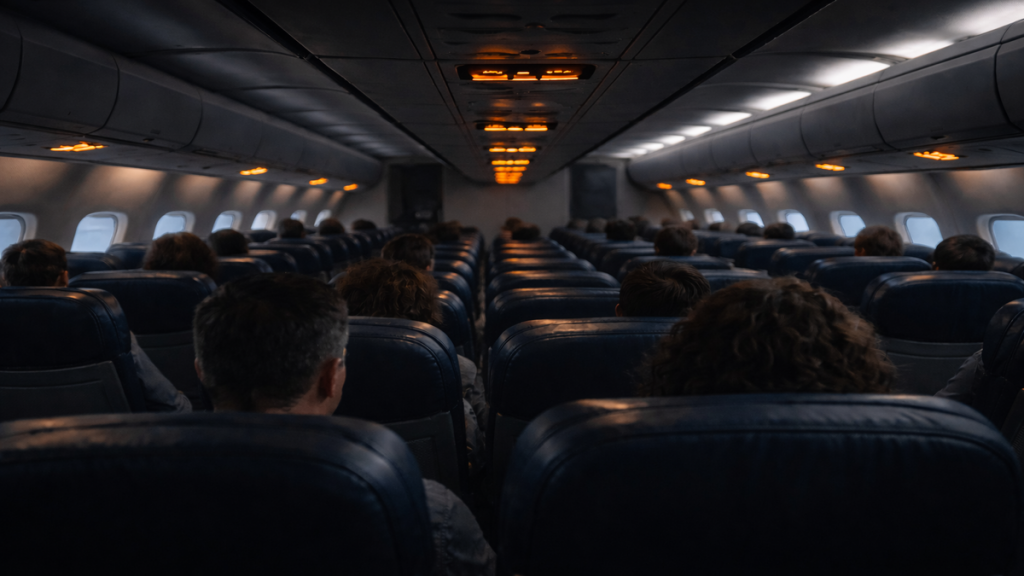
FAA guidance for airline cabin briefings supports the same habit. The FAA calls for an announcement after takeoff that asks passengers to keep seat belts fastened while seated even when the sign turns off, because turbulence can arrive with little warning.
A snug, low lap belt is more important than many people realize. Be sure to tighten the belt and eliminate any slack. Only unfasten it when necessary, and remember to refasten it as soon as you sit back down. Additionally, it’s important to secure loose items, so make sure to keep bags and other belongings properly stowed whenever possible.
As a student pilot, I focus on developing the right mindset. My training emphasizes the importance of avoiding thunderstorm-type weather when possible, and following established procedures for making course corrections when necessary. Passengers play a vital role in this process by trusting the flight crew and adhering to cabin crew instructions.
Post Comment