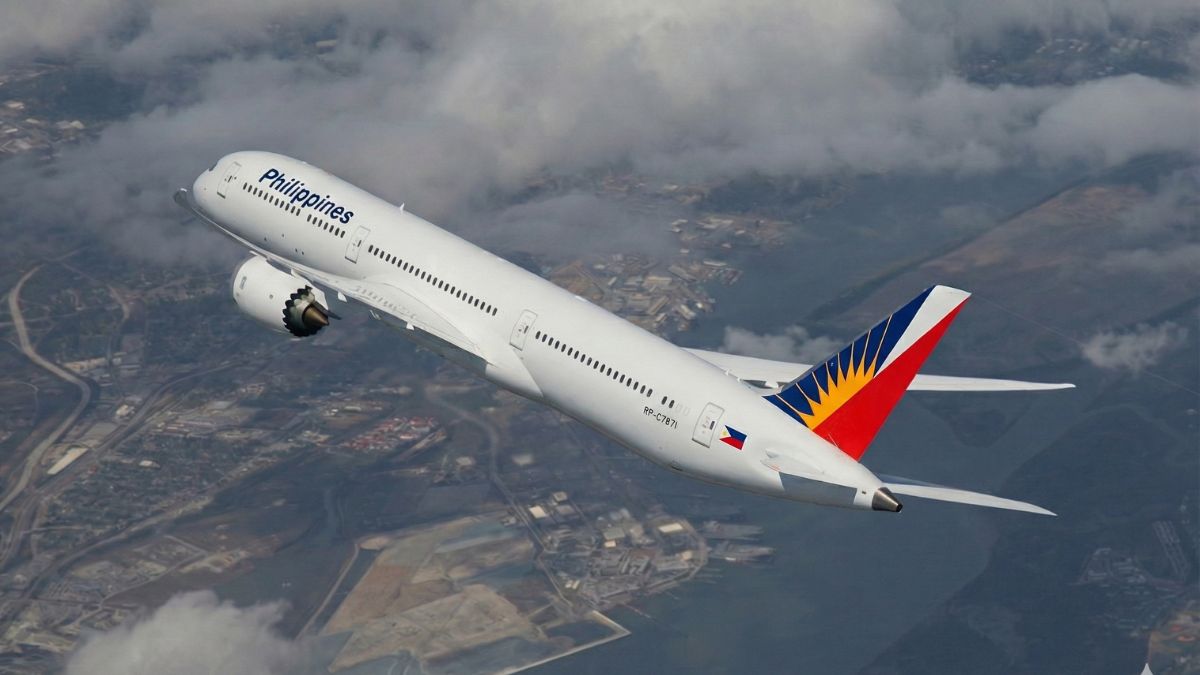
There is now a lot of talk about the future fleet of Philippine Airlines. This includes the delivery of the remaining Airbus A350-1000s and the continued delivery of A321neos. With that, many people now expect PAL to order new aircraft to replace the A330-300s in the PAL fleet and the A320ceos in the PAL Express fleet. Two common options to replace the A330-300 are the Boeing 787-10 and the Airbus A330-900neo, also called the A330neo.
My personal pick is the Boeing 787-10, and I want to share why I think it can fit PAL’s direction and future goals. Fleet selection has many factors, and each airline uses its own approach. I am sharing the general points that stand out based on PAL’s direction and the latest updates on the 787-10.
PAL has been clear on a few priorities. Cargo is one of them. Last year, PAL relaunched its refreshed PAL Cargo with more services, including business-to-consumer deliveries, and more features for businesses and consumers. I expect cargo demand to keep growing in the next few years, so widebody belly cargo becomes more important.
Operational flexibility is another priority. PAL’s A330-300s already fly the Middle East, Asia-Pacific, Hawaii, and Australia. PAL will likely want a replacement with more range and payload margin in case it needs to fly farther, carry more cargo, or operate with less penalty on difficult days.
Boeing’s higher-weight 787-10 and what changed
Boeing has said it is rolling out a higher-weight 787-10 that gives airlines more usable range or more payload, with first deliveries expected in the first half of 2026. The 787-10 is already built for high-capacity long routes. Boeing lists the 787-10 at up to 336 passengers with a published range of 6,330 nautical miles (11,730 km).
The upgrade Boeing is preparing focuses on a higher maximum takeoff weight (MTOW). Boeing’s airport compatibility document shows the 787-10’s MTOW rising from 560,000 lb to 574,000 lb, which is an increase of about 14,000 lb. Boeing says that added capability can be used in two ways: about 400 nautical miles of extra range, or about 5–6 tonnes more belly cargo on existing routes.
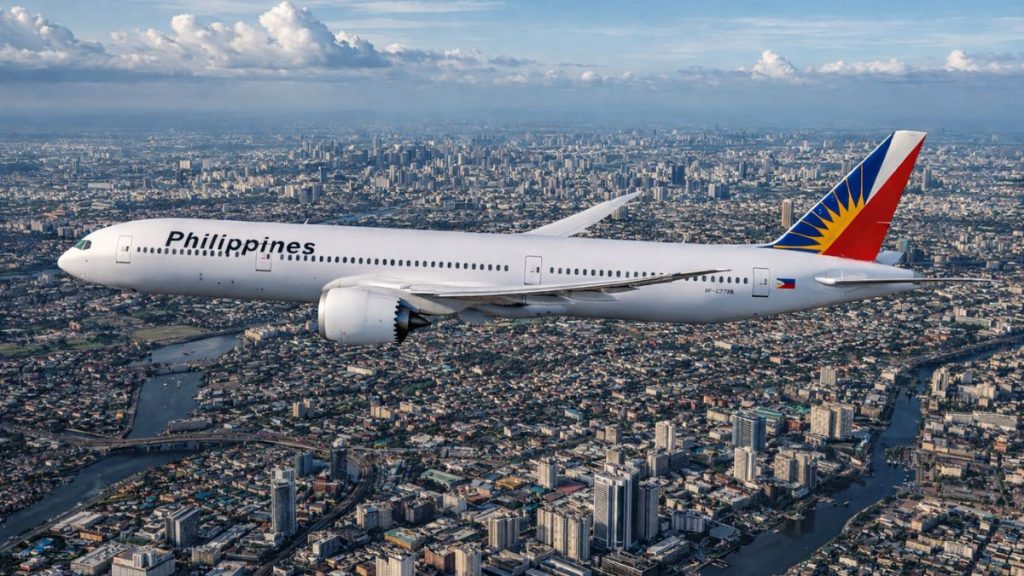
Some people ask how range can increase without bigger fuel tanks. The fuel tanks do not get larger. Boeing and industry reporting describe this as structural and design refinements plus a higher certified weight, not added fuel volume. The practical point is that some missions are limited by takeoff weight, not tank volume. A higher MTOW can give more room for the fuel-and-payload combination you need, or keep the same payload with more margin for winds and reserves.
This higher-MTOW 787-10 matters most on routes where weight pressure shows up often, such as long sectors with strong headwinds, hot days, long climbs, short runways, and routes where belly cargo revenue is important.
Why this fits PAL’s A330-300 replacement needs
PAL already runs dense A330-300 layouts on routes to the Middle East and regional routes. Singapore Airlines runs its 787-10s at 337 seats (36 business + 301 economy), which shows the aircraft can support a high-density widebody layout without becoming a single-class cabin. That is relevant because PAL’s Middle East services uses their more dense A330-300 with 18 lie-flat business seats and 341 economy seats (359 total). A 787-10 built around a similar layout concept matches that direction.
PAL’s current A330-300 route mix fits the 787-10’s core mission. PAL uses the A330-300 on Australia services and on Honolulu, where they schedule their 309-seat A330-300. These are high passenger-volume missions over medium-to-long stage lengths, which is where the 787-10 is strongest.
The higher-MTOW version changes the discussion for PAL’s Middle East and Hawaii flying. Westbound long sectors can be the hardest days because of stronger winds, higher temperatures, and added fuel requirements for alternates and holding. More certified weight gives more room to carry what you need without giving up payload. PAL can also choose to use the gain for cargo instead of range, which supports routes where belly cargo is valuable.
Cargo lines up with PAL’s direction in a straightforward way. The improved 787-10 option of “either more range or 5–6 tons more cargo” supports a cargo push that can be monetized on widebody routes.
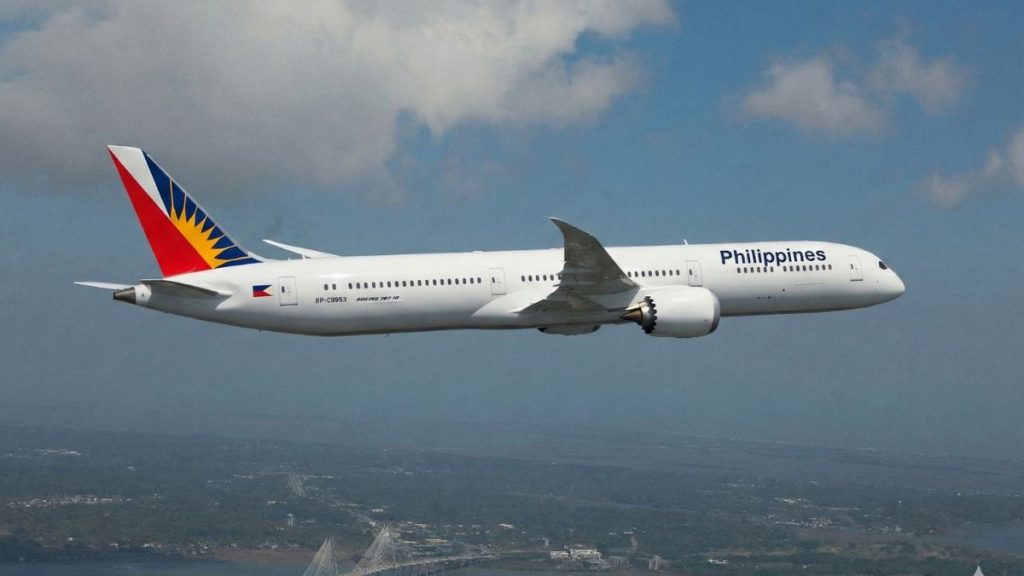
The 787-10 still has limits, so it is important to be precise. The published range starts at 6,330 nm. The upgrade adds margin, but it does not turn the 787-10 into a 787-9. The flexibility advantage is strategic. If PAL builds around the 787 family, the 787-10 can cover dense A330-style missions, and PAL could later add the longer-range 787-9 if it wants more nonstop reach, with common fleet logic.
Where the A330neo remains strong
The A330-900neo has a published range of 7,350 nm and a typical three-class capacity of 287–303 seats, with Trent 7000 engines. It gives more buffer if PAL wants to stretch routes without moving up to an A350. It also keeps PAL within an Airbus widebody line, and PAL already operates Airbus widebodies. Let’s also not forget pilot and crew training as the adjustment and training from the A330-300 to the A330neo is very minimal, less costly, and quick.
If PAL’s A330 replacement decision centers on high-density seating, competitive unit costs on Australia and Middle East missions, and a stronger cargo contribution, the improved 787-10 becomes more attractive than before because it adds what PAL would likely feel most: more payload and range margin or more cargo uplift. The A330neo remains a strong alternative if PAL prioritizes maximum range margin on one type. The final choice depends on PAL’s internal analysis, and PAL may still choose the A330neo, the 787-10, or a mix.

Post Comment