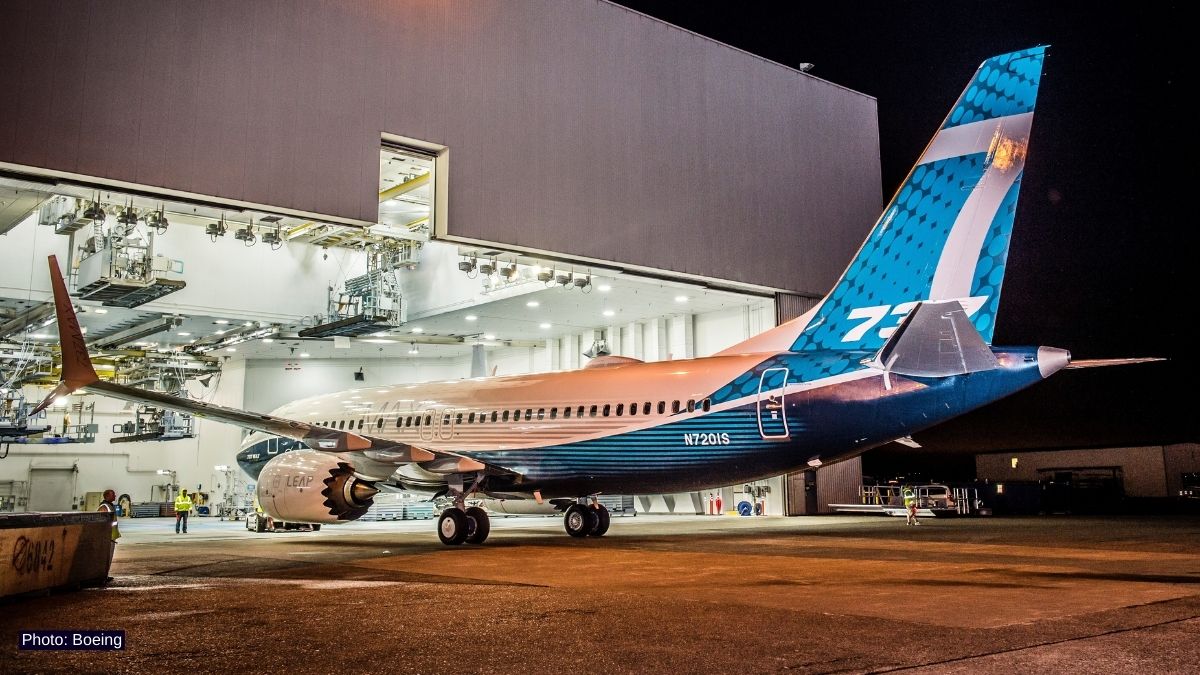
Boeing Global Services says the aerospace aftermarket is moving into a recovery phase after supply chain problems slowed parts and maintenance work. William Ampofo, a senior vice-president at Boeing Global Services, says strong demand for new aircraft has also pushed more pressure onto the same suppliers the aftermarket depends on. “The challenge is, now that the production cycles for OEMs have lifted, and [OEMs] are doing rate breaks, it’s putting demand on the supply base,” he said. “We’re not over the hump. Definitively not,” he added. “We really are in recovery mode.”
The aftermarket has been adjusting since the Covid-19 period, and the changes have not been small. A wave of consolidation reshaped the sector as some smaller firms struggled and larger players combined. One of the biggest examples was the unification of Collins Aerospace, Pratt & Whitney and United Technologies under RTX.
Supply chain stress still shows up in daily operations
A workforce shift has also added pressure. Ampofo pointed to a “demographic shift” driven by “accelerated” retirements of experienced workers, which left gaps across the supply chain and maintenance ecosystem.
Unexpected events have also created setbacks. An explosion last year at a facility operated by SPS Technologies, a Precision Castparts subsidiary, disrupted the flow of fasteners and other key components. Airlines also faced widespread disruptions from maintenance issues tied to new-generation engines, which forced carriers to ground hundreds of aircraft. That added more demand to an MRO sector that was already stretched.
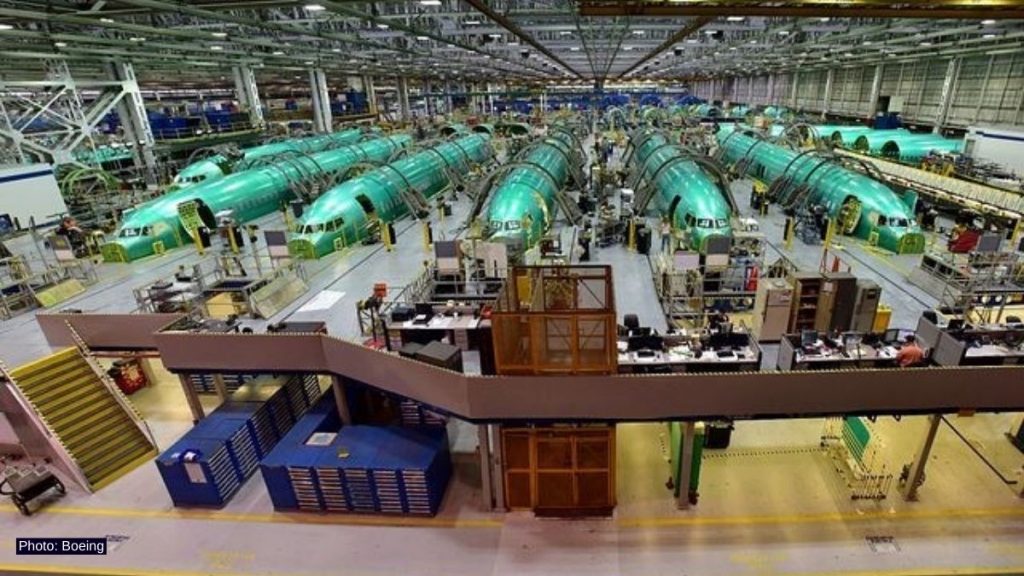
Aircraft manufacturers are also pushing to build faster to meet demand, and that pressure feeds into the aftermarket since many of the same suppliers support both sides. Ampofo summed it up this way: “You’ve got this perfect growth trajectory that is pulling on the same supply base,”.
How Boeing is adjusting its services strategy
Boeing says it cannot fix every structural problem in the supply chain, but it has been working on areas it can influence. The company formed a “supplier recovery team” last year and used its “engineering and technical resources” to help suppliers improve efficiency and increase output. Boeing has also looked for new suppliers and supported expansion efforts, including help with funding and regulatory steps.
Ampofo said quality problems that affected manufacturers in recent years have eased in many areas. Output remains the main issue, since demand keeps pulling harder than supply can respond.
Those pressures have also shaped how Boeing runs its services business. In the years before the 737 MAX crisis, Boeing Global Services expanded through acquisitions under then-CEO Dennis Muilenburg, aiming to lift services revenue to $50 billion annually by the mid-2020s from $13.9 billion in 2016. Boeing pulled back from that goal around 2020 and shifted to a more conservative approach.
That shift showed up again in November when Boeing sold four digital businesses inside Boeing Global Services, AerData, ForeFlight, Jeppesen, and OzRunways, to Thoma Bravo for $10.6 billion. Boeing Global Services still remains large, bringing in $20 billion in revenue in 2024.
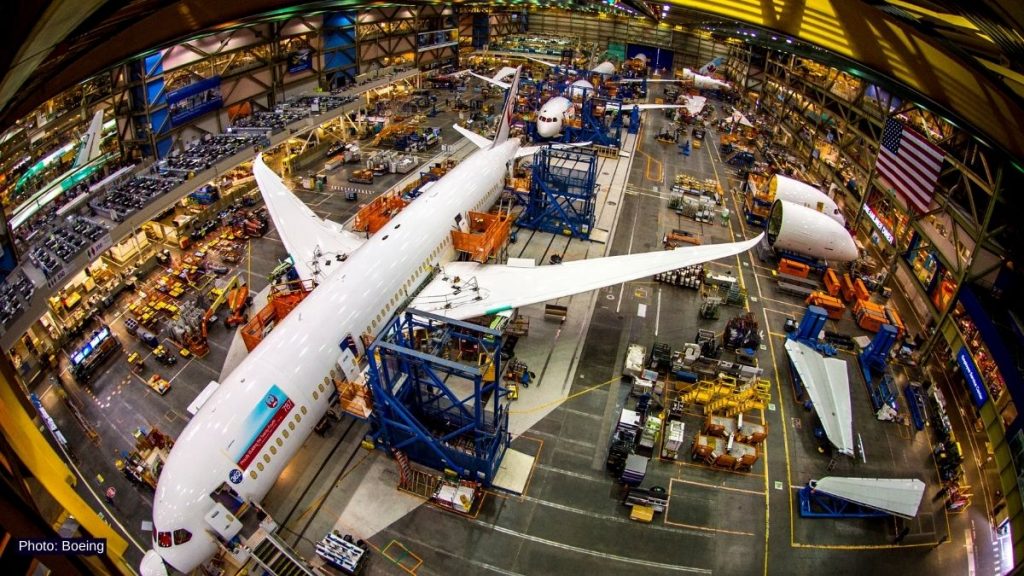
Ampofo also described how Boeing is leaning more on data to run parts planning and service work in a more predictive way. “There’s streams of data that are coming off of aircraft… We’re trying to establish strong partnerships so that we understand the data profiles of our customers,” he said.
Boeing has been expanding use of its Parts Planning Hub, which lets airlines and MRO customers share parts needs and forecasting data with Boeing through one system. “This is an integrated interface that allows us to exchange data, so that we [can] run simulations and models that feed into our planning tool,” Ampofo said. Boeing says seven customers now actively collaborate on forecasting through the hub, and it wants five more this year. Ampofo said airlines that shared data saw the benefits quickly, since “they quickly saw that the value was there. They saw an 8-10% improvement in their on-time delivery just by sharing data”.
Attribution: FlightGlobal
Post Comment