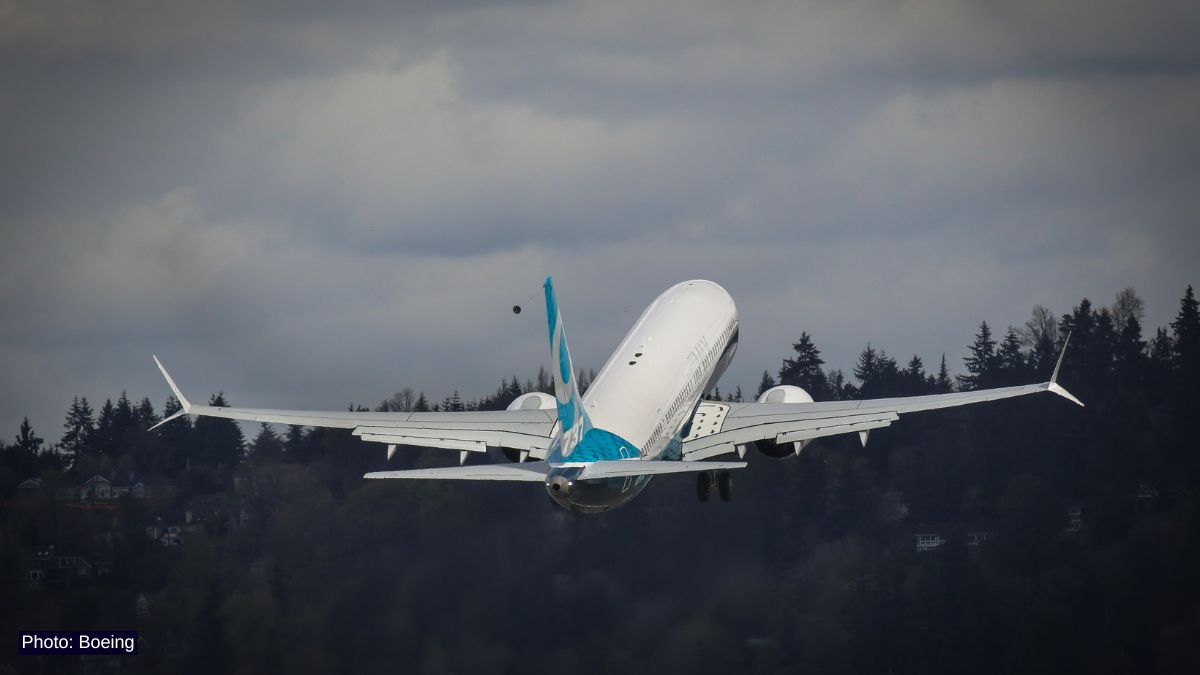
Boeing has spent decades working on ways to make turbulence less disruptive in flight. Across its Flight Controls and Stability and Control teams, engineers have been studying how aircraft respond to rough air and how onboard systems can react faster to reduce shaking, improve ride comfort, and give crews more time when conditions get worse.
The company says most turbulence is more of a comfort and safety issue than a structural one. In other words, the bumps passengers feel are usually about ride quality, not damage to the aircraft itself. That is why Boeing’s work has focused on better sensing, quicker control responses, and stronger testing to reduce movement in the cabin and lower the risk of injuries.
Ryan Pettit, an Associate Technical Fellow, and Paul Strefling, a Boeing Designated Expert in Flight Controls, have worked on automated fly-by-wire systems. Shubhank “Shubi” Gyawali, who works in aerodynamics for Stability and Control, studies flying qualities and ride comfort.
How Boeing tries to reduce turbulence effects
Over the years, the work has moved from older analog fixes to more advanced systems built around models, sensors, and fast computer control. Strefling pointed to one major moment during the 777-9 program, when an early test system did not perform well enough. “I drank a bunch of coffee and stayed up for, like, two nights straight. … I realized that we could solve this by using more surfaces and sensors. And then two years later, we flew it and it worked.”
That pushed the team toward a system that uses multiple sensors and control surfaces across the aircraft at the same time. Boeing says this raises both performance and complexity and will be part of future airplane designs.
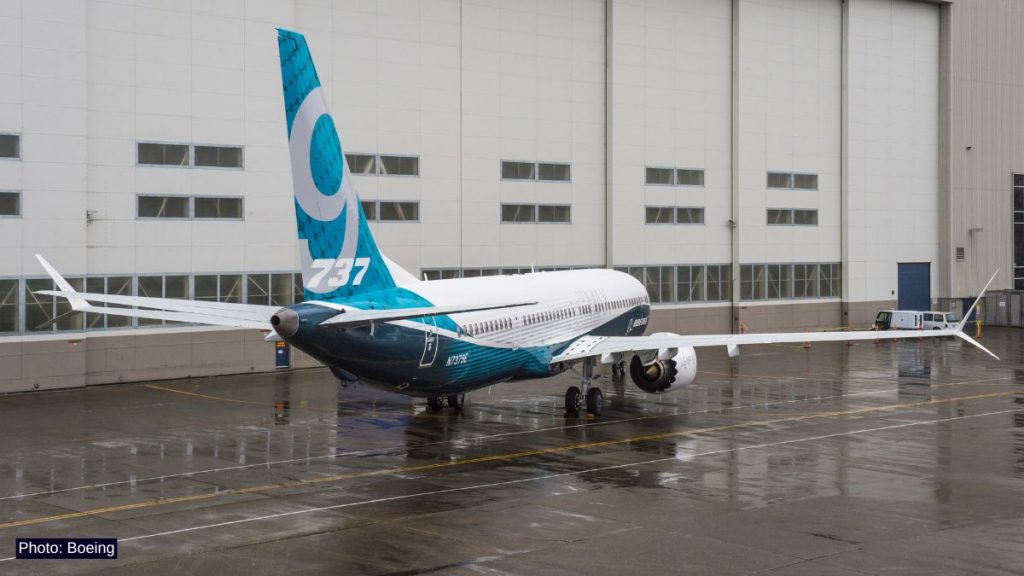
The controls are built around two main functions. One is modal suppression, which reduces structural bending so the wings and fuselage do not keep moving as much in turbulence. The other is gust suppression, which works against larger aircraft motions such as rolling, pitching, or shifting in the air. Sensors such as accelerometers, airspeed instruments, angle-of-attack vanes, and dedicated gust sensors send data to algorithms that command the elevators, ailerons, and rudder within milliseconds.
Pilots still give the main commands, but the system helps manage what happens next. “The computer figures out how to move all the flight surfaces to achieve it, while trying to reject disturbances from turbulence,” Pettit explained.
Gyawali described the challenge in simple terms. “The atmosphere is chaotic. When the airplane gets introduced to this chaotic, unpredictable atmosphere, it gets excited,” Gyawali adds. “And now I need to manipulate my control surfaces …so that my airplane doesn’t get as dynamically excited. Or, in other words, if my airplane is dancing in this cloud of atmosphere, I’m making it, like, a bad dancer, making it more stiff.”
Testing starts in simulators before it reaches the sky
Much of this work begins in high-fidelity simulation before it ever reaches a real airplane. Boeing then moves the design into its Multi-Purpose Engineering Cabin, or MCAB, a full-motion simulator that can mimic turbulence and let engineers study ride quality and pilot response in real time. Only after that does the work move into flight testing.
Gyawali said his own confidence in flying grew as he learned more about the process. “After seeing what we test and how extreme some of the conditions are that we evaluate against, I’m very comfortable now,” he said. “My parents would be too.”
Post Comment