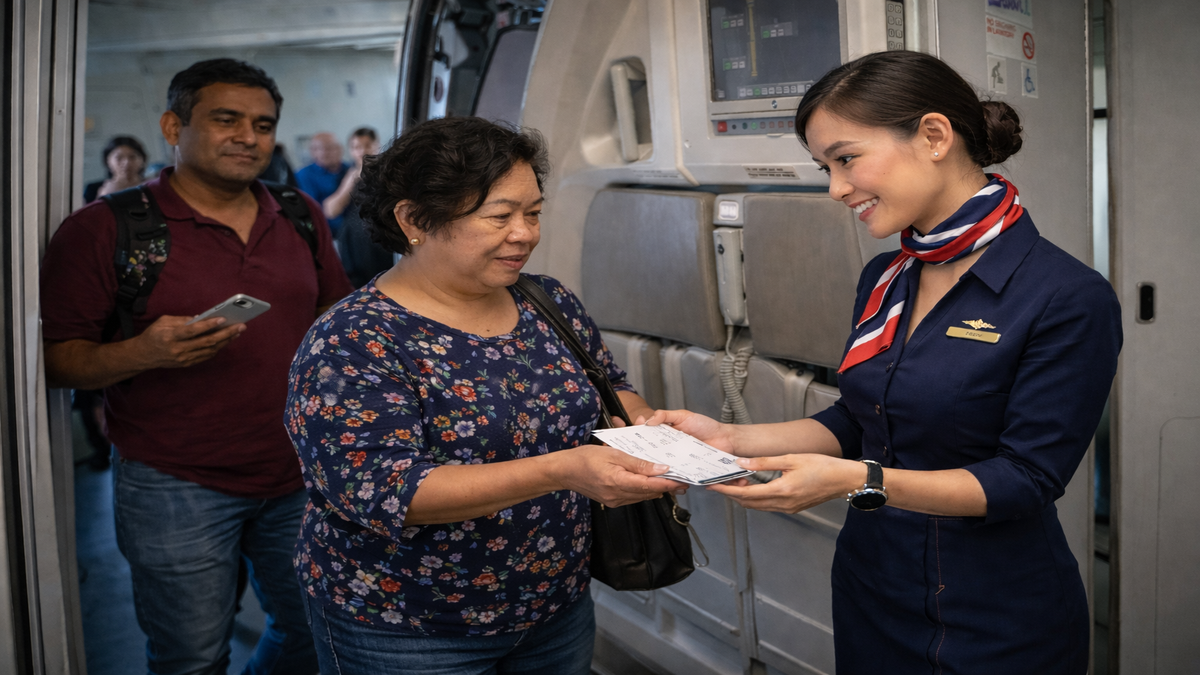
Many passengers think flight attendants only greet people and point them to their rows during boarding. Flight attendants also use boarding to scan the cabin and catch issues early. They look for details that can affect safety, comfort, and how smoothly the flight can depart. The crew does not “profile” passengers for fun. The crew forms a quick picture of who may need help, who may create a problem, and who may assist if something goes wrong.
Flight attendants do this fast. The cabin can fill in minutes, and the crew has one main chance to see everyone before the doors close. The crew notices your physical condition, your behavior, and how you move in the aisle. The crew also pays close attention to the exit rows, since those seats come with added responsibility.
Exit rows and who can assist
Exit row seats require passengers who can and will help in an emergency. Flight attendants check that the people in those seats look able to follow instructions and handle the exit if they ever need to. Crew members also watch the rows near exits during boarding because the crew needs clear access to those exits. Cabin crew can move a passenger out of an exit row if that passenger cannot assist. The crew can also reseat another passenger there to keep the row staffed.
Flight attendants also notice passengers who look physically fit enough to help with basic tasks if needed. Most emergencies never happen, yet airlines still plan for them. Cabin crew members want to know who may help guide others, lift a hatch, or move quickly without delay. This planning supports a safer cabin when seconds matter.
Passengers who may need extra support
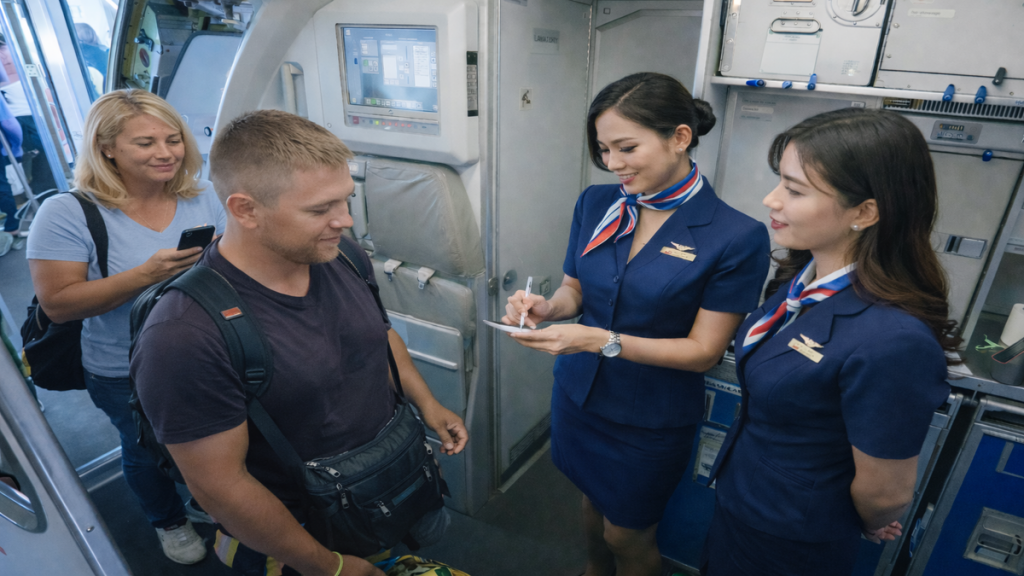
Flight attendants watch for passengers who may need assistance, such as older travelers, passengers with injuries, and families with infants. The cabin crew does this for planning, not judgment. The crew wants to know where help might be needed, and the crew wants to keep the aisle clear if something urgent happens. Early awareness also helps the crew offer support before a small issue turns into a bigger one.
The cabin crew also watch for passengers who look unwell. Crew training includes steps for handling medical events, and early attention can help a lot. Crew members may also flag a concern to the lead cabin crew or the flight crew when a passenger looks sick before departure. This can lead to a quick check, better seating decisions, or a plan to respond if the passenger feels worse in the air.
Some illness concerns also involve public health. Health guidance for cabin crew includes steps for managing a sick traveler and limiting close contact when needed. Cabin crew members look for signs that suggest a passenger might need extra care, and the crew wants to protect the rest of the cabin at the same time.
Behavior matters for safety reasons
Flight attendants also watch behavior. The crew checks who follows directions, who stays calm, and who shows signs of impairment. Boarding gives the crew a clear view of speech, balance, and attitude. A passenger who looks intoxicated or acts hostile can create a safety problem in the air, so the crew wants to spot warning signs before the doors close.
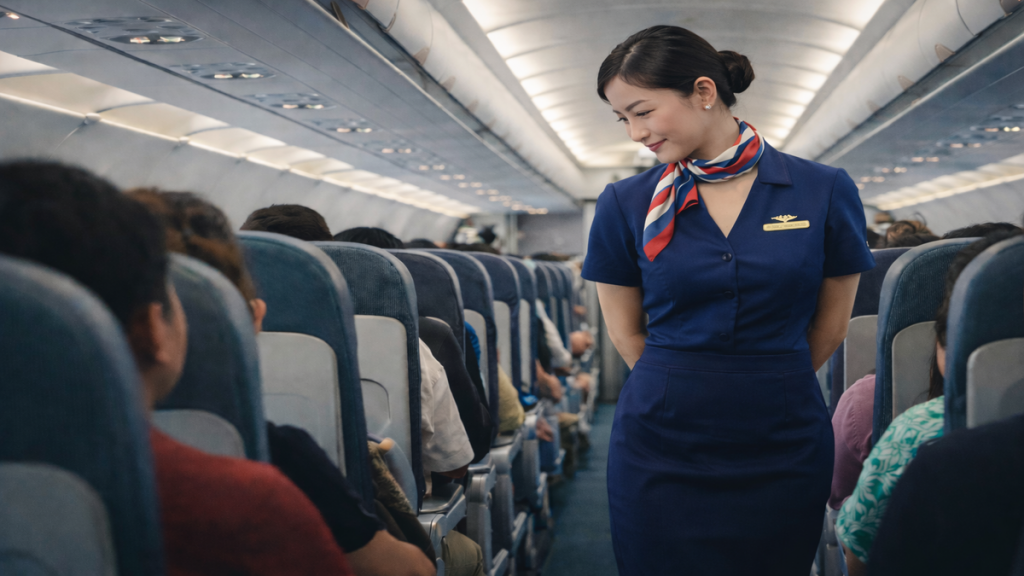
Flight attendants also watch for passengers who ignore basic rules, argue with staff, or act aggressively. Airlines and regulators treat refusal to follow crew instructions as a serious issue. The cabin crew cannot run a safe cabin if a passenger refuses to cooperate. Cabin crew members need a cabin where people follow directions, especially during taxi, takeoff, and landing, and also during any sudden change in the flight.
Footwear and evacuation readiness
Footwear can sound like a small detail, yet it can matter in an evacuation. Flight attendants often notice passengers who wear high heels. Slides can tear, and heels can slow a person down during a fast exit. Safety guidance for passengers includes removing high-heeled shoes during an evacuation.
Flight attendants also consider what shoes mean for movement. Shoes that slip, pinch, or limit balance can slow a passenger during a rapid exit. The crew cannot control what people wear, yet the crew can give clearer instructions if a situation demands it. This also connects to the crew’s larger goal during boarding, which involves reducing risks before the aircraft leaves the gate.
Passengers can help themselves and everyone else with simple habits. A calm tone helps. Respect for crew instructions helps. Honest answers help if a crew member asks a question about an exit row seat or a medical concern. The safest move starts with cooperation, since the crew trains for rare situations that need fast, clear action.

Post Comment