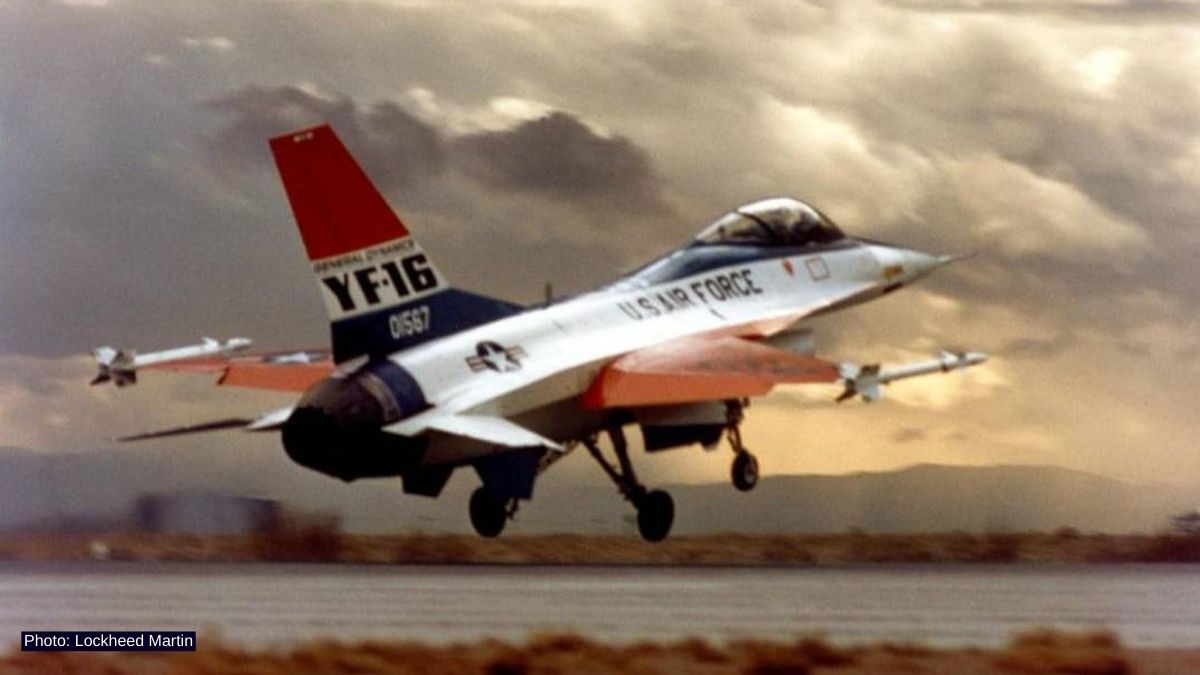
Aircraft manufacturers plan a prototype’s first flight only after many ground tests, such as braking tests, taxi tests, and high-speed taxi runs. Even with careful planning, problems can still happen. The F-16’s first flight happened this way. A near accident during a high-speed taxi test turned into the first time the YF-16 ever flew.
January 20, 1974 started as a routine test day at Edwards Air Force Base. General Dynamics had the YF-16 prototype scheduled for a high-speed taxi test, not a flight. The plan was to accelerate, confirm handling, then brake and stop. The first official flight was still set for February 2, 1974.
Test pilot Phil Oestricher lined up for the run and began accelerating. The taxi card called for a speed of about 135 knots. Everything looked normal at first. As the aircraft reached higher speed, the controls became very sensitive. The YF-16 began rolling side to side in rapid oscillations. The movement increased quickly and the aircraft started to threaten its own wingtips. The right horizontal stabilizer struck the runway during the oscillations, which made the situation more urgent.
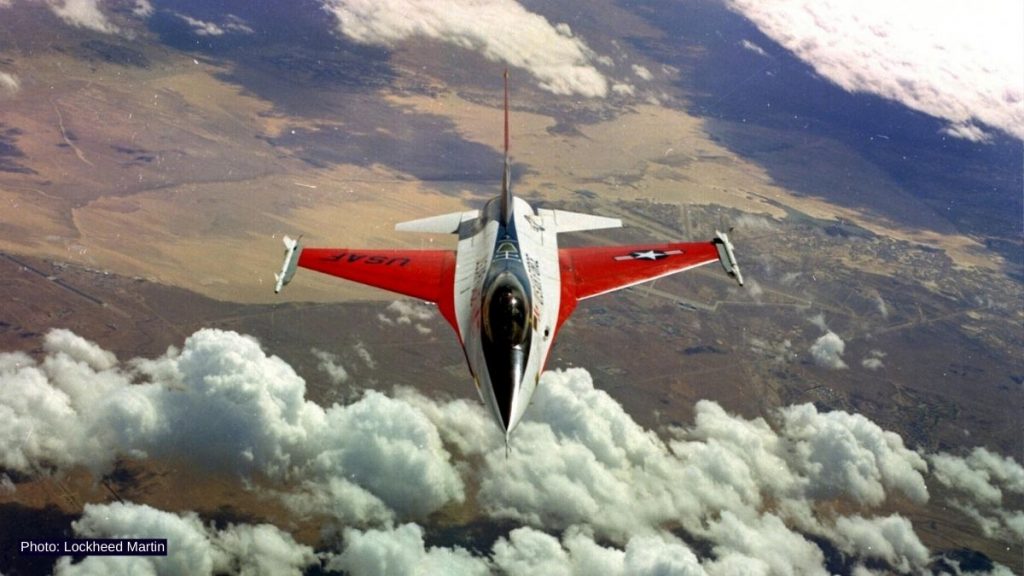
Oestricher faced two unsafe options. One option was to keep trying to stop a jet that was already unstable on its wheels. The other option was to take it airborne, gain altitude, and use more control authority to stabilize it. He chose the second option. He rotated, lifted off, and turned a planned taxi run into the first time the F-16 ever flew. The flight lasted about six minutes, then he returned and landed safely.
The unplanned liftoff was linked to what made the aircraft new. The YF-16 used a side-mounted controller that did not move like a traditional stick. It measured pressure and sent that input through electronic sensors and actuators. The system was fly-by-wire, and it required a different kind of control input than older jets. Oestricher trained in a simulator, yet the simulator did not fully match what he would feel in the real aircraft. Small inputs became larger commands than he expected, and the airplane reacted strongly at speed.
Investigators studied the event right away. The goal was to understand why it happened and prevent a repeat. A later assessment pointed to an older flight test technique that did not translate well to fly-by-wire behavior. The team adjusted procedures and continued the test program with tighter discipline on how the controls were used during runway testing. The work focused on learning from the event and reducing risk during future runs.
The first official YF-16 flight
The official first flight still happened on February 2, 1974, again with Oestricher at the controls. That flight marked the formal start of the YF-16’s flight test program. The January 20 event stayed in aviation history because it showed how quickly a new design could behave differently from what experienced teams expected, even during a test that was not supposed to leave the ground.
The YF-16 came from the Lightweight Fighter program. This program aimed to prove that a smaller fighter could deliver high performance without the weight and cost of heavier designs. General Dynamics built the aircraft around agility and pilot awareness. The layout aimed to help the pilot see more, react faster, and control the jet with less physical effort. The bubble canopy improved visibility. The reclined seat helped pilots tolerate high G loads. The airframe design also pushed maneuverability hard, so the flight control system needed to be precise and dependable.
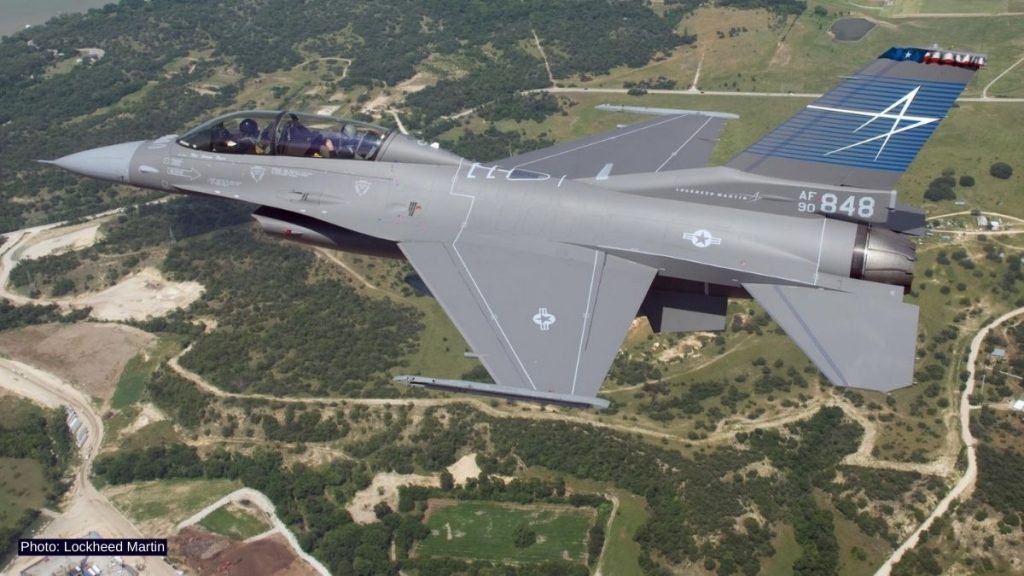
The fighter that followed the YF-16 became the F-16 Fighting Falcon. The U.S. Air Force lists January 1979 as the delivery date of the first operational F-16A to the 388th Tactical Fighter Wing at Hill Air Force Base, Utah. This timeline shows how fast the program moved from prototype work to operational service once the concept proved itself and the testing continued.
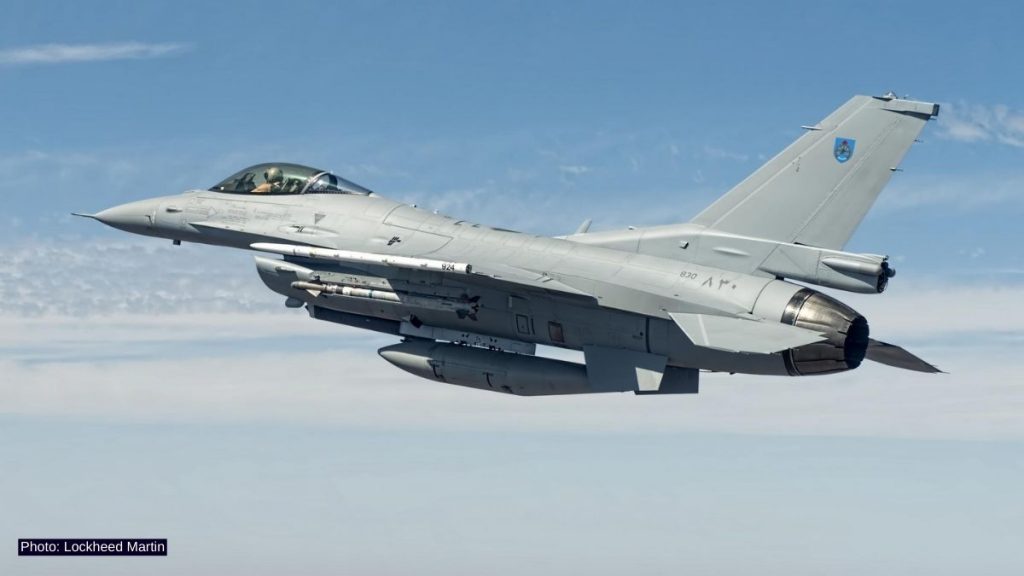
The aircraft kept evolving after that. Upgraded avionics, sensors, and weapons integration turned the F-16 into a long-running multirole platform. New-build F-16s are still being produced for international customers. The latest version of the F-16 is the Lockheed Martin F-16 Block 70/72 Viper, which shows the aircraft remains part of modern fleet planning decades after the YF-16’s early tests.
This story is not that the first flight was “accidental.” The key point is that the aircraft’s new control system changed how test pilots needed to handle the jet, even on the runway. The team responded by studying the cause, adjusting procedures, and continuing the program. The result was a safe landing on January 20 and an official first flight soon after on February 2, 1974.
Post Comment