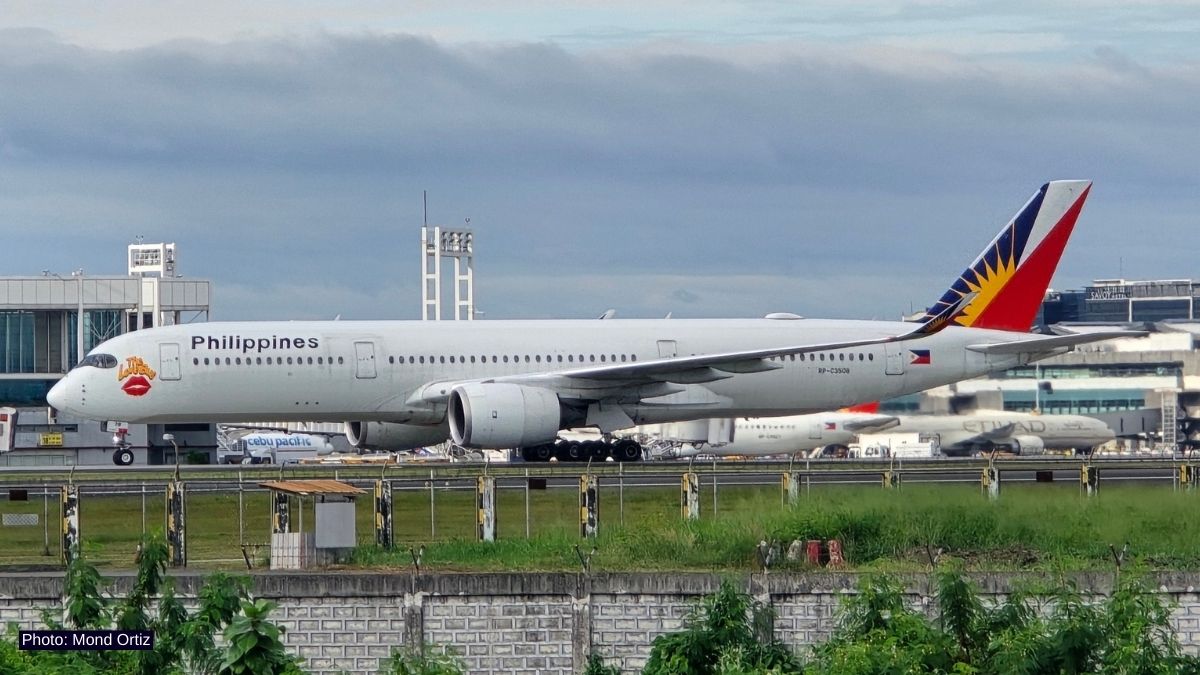
The term “Love Bus” brings one familiar image to many titos and titas of Manila: the blue buses in Metro Manila that used to run along EDSA and Ayala Avenue in the 1980s. I remember seeing them during that decade, and they may have already been around in the 1970s. That memory is why, when Philippine Airlines introduced its Airbus A350-900 with a “Love Bus” decal, some people thought PAL created something new. The “Love Bus” decal on the A350-900s, including the two aircraft that carried it in 2018, was not a new design. The name and idea goes back to 1979.
The “Love Bus” design first appeared on PAL’s first Airbus aircraft, the Airbus A300B4. The A300B4 mattered because it was the first widebody twinjet built for short- to medium-range routes, which matched the kind of regional flying PAL needed. Twinjets at that time were usually narrowbody short-haul aircraft like the Boeing 737, the McDonnell Douglas DC-9, and the BAC One-Eleven. Another twinjet that appeared in that period, yet did not last long, was the Dassault Mercure.
Most widebody aircraft in that era were meant for longer flights. The Boeing 747 used four engines, and the McDonnell Douglas DC-10 and the Lockheed L1011 Tristar used three engines. That is why the A300B4 was a different kind of widebody when Airbus introduced it in the late 1970s. It was the only widebody twinjet designed for short to medium routes at the time. It gave airlines the ability to carry more passengers even on shorter distances while still operating efficiently.
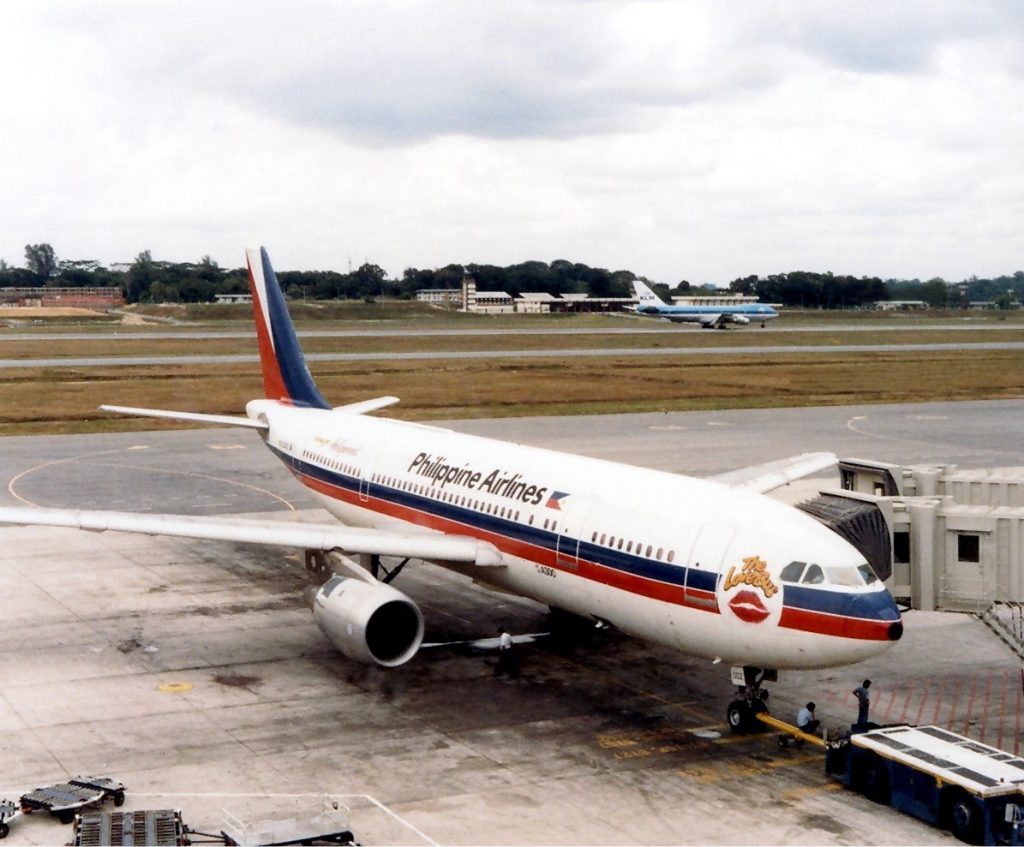
PAL received its first Airbus A300B4-100 on November 30, 1979. It was the first Airbus in the PAL fleet, so it carried a special decal called “Love Bus.” The decal featured a “kissing lips” logo near the nose, and it marked the arrival of a new aircraft type for the airline. The name “Love Bus” also helped promote a new, comfortable widebody service, and it became a well-known design in the late 1970s and the 1980s. PAL operated a total of 13 A300B4s from 1979 to 2001.
The “Love Bus” revival
PAL later brought the “Love Bus” back in a modern form. In February 2019, PAL revived the “Love Bus” on an ultra-modern Airbus A350-900 with registry RP-C3507. PAL did not stop with one aircraft, since it also had two A350s that carried the “Love Bus” decal. One “Love Bus” aircraft left the fleet in 2021, leaving PAL with one A350-900 that still carries the “Love Bus” decal, RP-C3508.
The “Love Bus” is more than a historic name for PAL. It also matters to Philippine aviation history because it signaled the entrance of Airbus into the Philippines. Airbus aircraft now dominate the Philippine local airline industry, and the change became clear as fleets modernized over time.
Today, PAL and Cebu Pacific combined operate every Airbus aircraft currently in the Airbus catalog as of this writing. Cebu Pacific operates the A320neo. PAL and Cebu Pacific both operate the A321neo. Cebu Pacific operates the A330neo. PAL operates the A350-900 and the A350-1000. The A350-1000 is currently the largest commercial aircraft in production as of this writing. The Boeing 777-300ER is now out of production and the 777-9X still needs to pass certification.
I see “Love Bus” as a symbol of the long Airbus history in the Philippines, not only a memory for longtime PAL flyers. I also feel glad that PAL never retired the name. When I say “Love Bus,” especially to the titos and titas of Manila, I hope they do not only think of a bus. I hope they also think of Airbus.

Post Comment