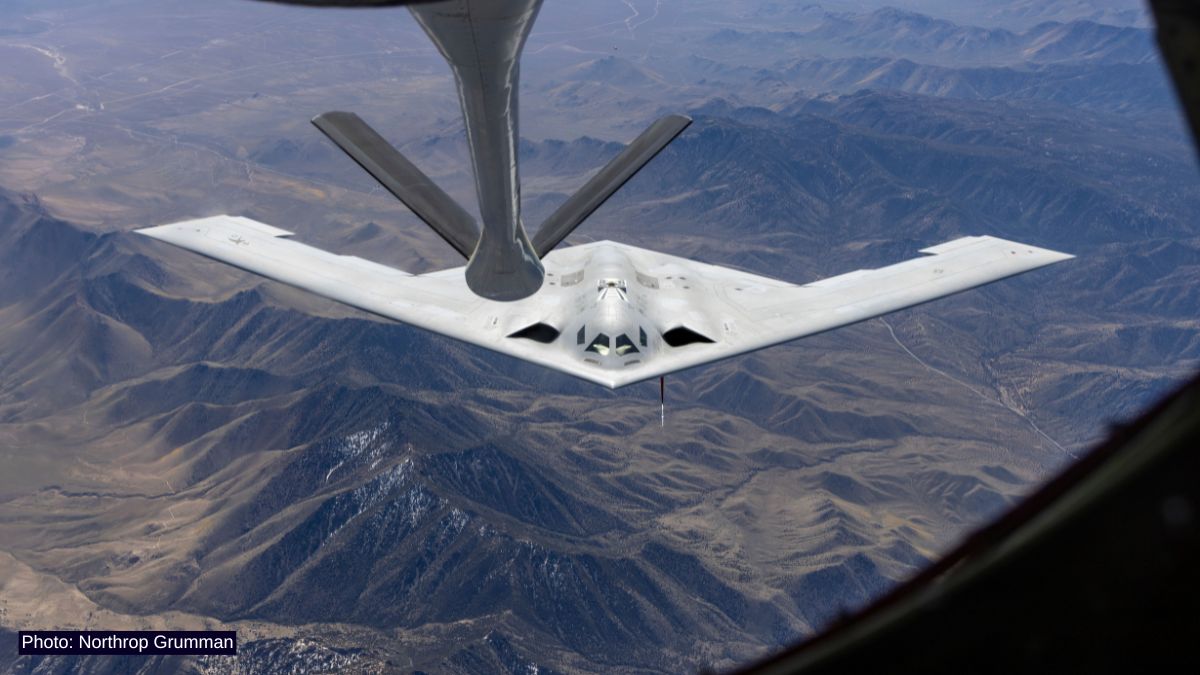
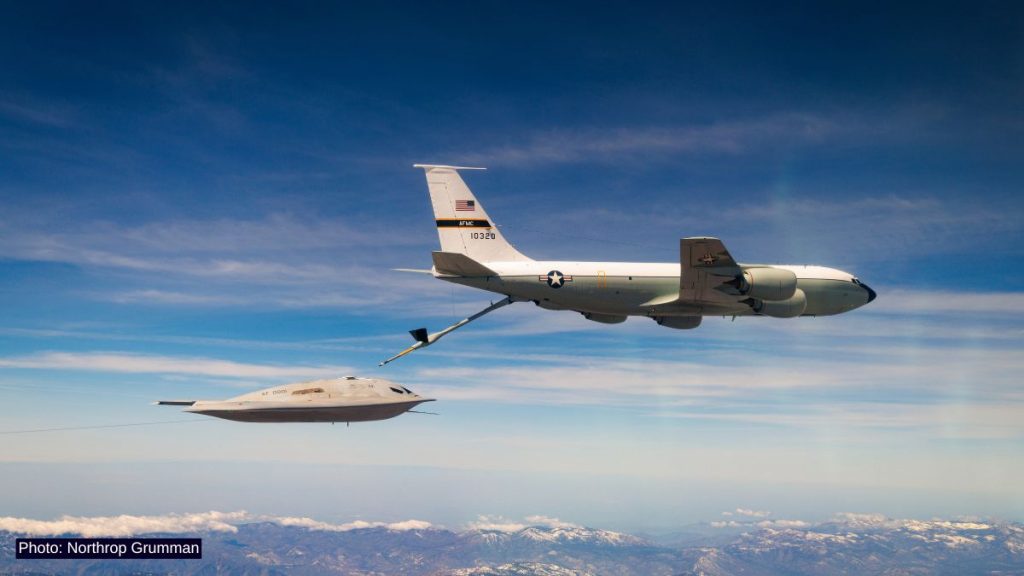
The B-21 Raider has reached another important step in its flight test program, with Northrop Grumman confirming that the new stealth bomber has now completed aerial refueling tests. That matters because refueling in the air is one of the key requirements for a bomber designed to fly long distances and stay in the mission longer without having to land.
Northrop Grumman says the test campaign is moving quickly as the company works toward delivering the first aircraft to Ellsworth Air Force Base in 2027. The company also said the B-21 is being built to give the U.S. Air Force a long-range bomber that can reach targets anywhere in the world while keeping a lower fuel demand than older aircraft.
“Our teams are moving the B-21 Raider through testing at an unprecedented pace, continually proving its outstanding performance – including aerial refueling,” said Tom Jones, corporate vice president and president, Northrop Grumman Aeronautics Systems. “We’ve designed and built a reliable, adaptable aircraft that is vital to our warfighters’ missions, while operating with a sense of wartime urgency to accelerate production and deliver this capability.”
Refueling test adds to growing flight campaign
Aerial refueling expands what the B-21 can do in real operations, but it also helps during testing. Northrop Grumman said the added capability allows longer and more efficient test sorties as engineers continue evaluating weapons and mission systems.
The company also says the B-21 uses much less fuel than fourth- and fifth-generation aircraft, which could reduce the need for tanker support in a combat theater. That gives commanders more flexibility in how they plan and support missions.
Northrop Grumman is also pointing to the aircraft’s broader design goals. The company says the B-21 is built with stealth, long range, and payload flexibility in mind, and that it is meant to handle both conventional and nuclear missions. It also says the bomber uses an open architecture approach so upgrades can be added more easily over time.
Production work is moving alongside testing
The program is not only focused on flying tests. Northrop Grumman said it has invested more than $5 billion in digital tools and manufacturing infrastructure tied to the B-21. According to the company, that investment is helping speed up production and giving it room to grow the fleet if future requirements increase.
Northrop Grumman also said multiple B-21 aircraft are now in flight test. It added that many sorties return in “code one” condition, meaning the aircraft comes back without maintenance issues and is ready to fly again. The company says that is a positive sign for future operational reliability.
The B-21 is expected to become a major part of the Air Force’s future bomber fleet. Northrop Grumman describes it as the world’s first sixth-generation aircraft to reach the skies, though the real test for the program will be how well it performs once it enters regular service.
For now, the aerial refueling milestone shows that the aircraft is moving deeper into the test phase while production work continues in parallel. That keeps the B-21 program on a path toward its planned first delivery in 2027.

Post Comment